Workplaces and events
Outdoor Workers During a Severe Thunderstorm Watch
Plan for outdoor workers during a severe thunderstorm watch with monitoring, quick-stop tasks, shelter routes, communication, and warning boundaries.
A watch-stage crew plan for outdoor work: monitor reliable sources, identify stoppable tasks, brief crews, confirm substantial shelter, and change actions when thunder, lightning, or warnings arrive.
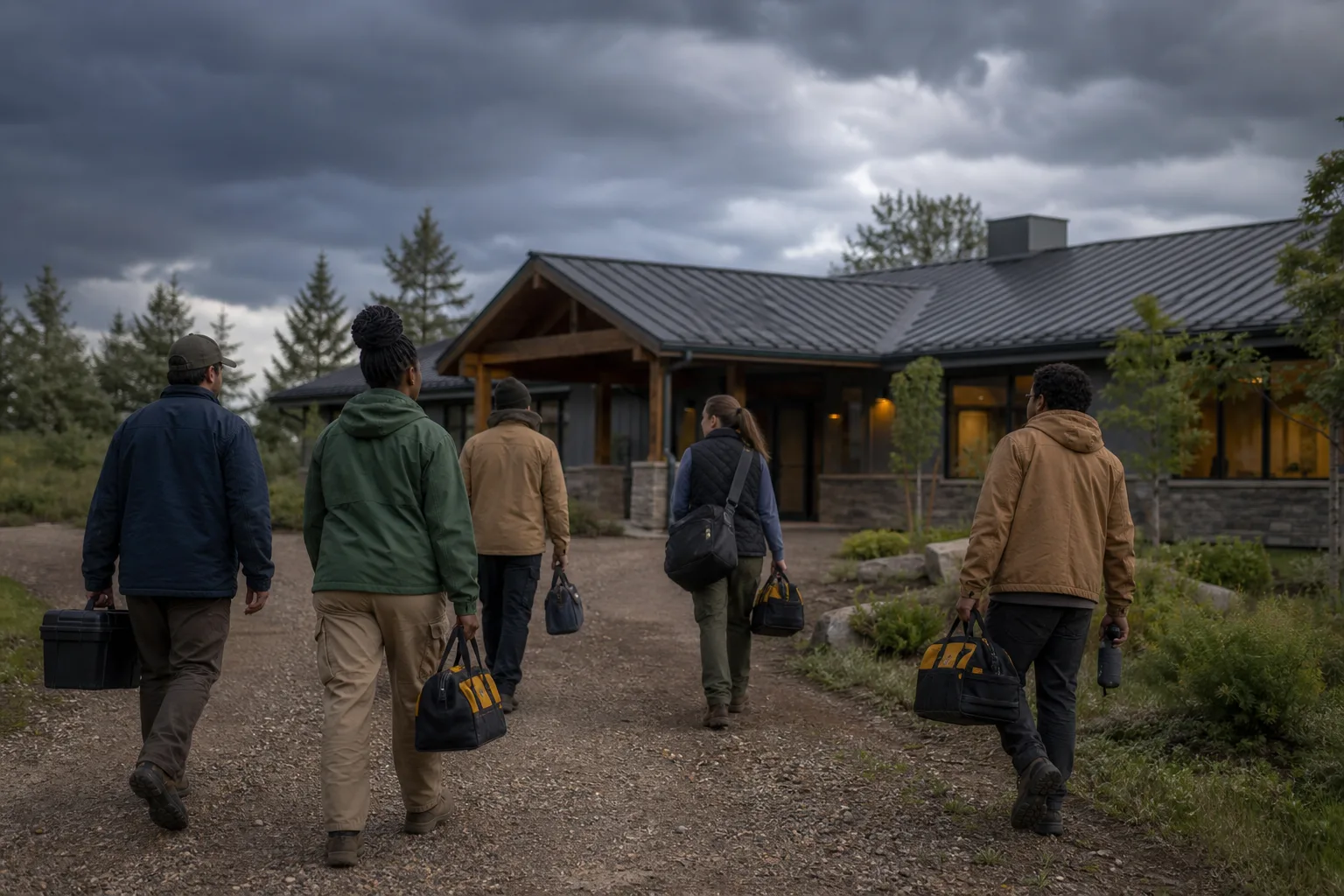
Outdoor workers during a severe thunderstorm watch need a supervisor-owned plan before storms are close: confirm who monitors reliable weather sources, identify tasks that can stop quickly, brief crews on how they will be notified, and make sure everyone can reach a substantial shelter or other preplanned safe place if conditions change. A watch means prepare because severe thunderstorms are possible; it is not a universal stop-work order and not proof that lightning is already at the worksite. Check current watch status with the free ZIP checker. If thunder, lightning, a Severe Thunderstorm Warning, or local instruction arrives, move from watch preparation to the workplace plan and official guidance.
Direct answer for outdoor crews
The watch-stage question is not only “Are we working or stopping?” It is “Can this crew change status quickly and account for everyone if the weather changes?” A good answer names the monitor, the backup monitor, the communication method, the tasks that can be paused, the shelter destination, and the authority to change the plan.
Outdoor work adds exposure that an office plan may not have. Crews may be spread across fields, roofs, road shoulders, landscaping sites, parks, yards, utility areas, or construction zones. They may be near tall objects, conductive materials, equipment, water, open spaces, or temporary shelter that is not lightning-safe. The OSHA/NOAA outdoor lightning fact sheet says workers outdoors in open spaces, on or near tall objects, or near conductive materials can have significant exposure to lightning risks.
This guide stays at the watch boundary. It does not create a law, a contract, a return-to-work policy, or a storm-distance threshold. It helps supervisors and crews prepare decisions before warning-stage or active-thunderstorm conditions compress time.
What a Watch means for work planning
A Severe Thunderstorm Watch means severe thunderstorms are possible in and near the watch area. NWS says people should stay informed and be ready to act if a warning is issued. For outdoor work, that means the supervisor should stop relying on casual sky-watching alone and shift into a deliberate monitoring and communication routine.
The monitoring role should check the worksite ZIP, weather.gov or local alert channels, and the employer’s chosen weather source. The person should also know what they are allowed to do with the information. If they can only report upward, the plan must name who decides whether to pause, stage, move, or cancel a task.
Crews need plain wording: “A Severe Thunderstorm Watch is in effect. Keep radios on. Finish only tasks that can stop quickly. If thunder, lightning, a warning, or a supervisor instruction occurs, follow the shelter plan.” The Watch vs. Warning guide can help supervisors keep that wording accurate.
Which tasks need a quick-stop plan
The OSHA/NOAA fact sheet says that if signs of approaching thunderstorms occur, workers should not begin any task they cannot quickly stop. During the watch stage, identify those tasks before they start. Examples may include elevated work, work involving cranes or lifts, utility work, roofing, field labor far from shelter, loading that blocks movement, or tasks that leave equipment exposed in a way that slows departure. The exact list belongs to the employer and worksite.
For each task, ask four questions. How long does it take to stop safely? Who gives the stop instruction? Where does each worker go? What equipment can be left, secured, or must be handled by a trained person before people leave? Do not invent a universal answer. A road crew, grounds crew, utility crew, and roofing crew have different hazards and different authority structures.
Driving decisions can be part of the plan if crews move between sites. If vehicles are involved, use a separate travel lens such as driving during a Severe Thunderstorm Watch rather than treating the worksite plan as a route-safety page.
Who monitors official updates for the crew
A common failure is everyone assuming someone else is checking. Assign one monitor and one backup for each crew or site. If the crew is split, decide whether each subgroup has its own monitor or whether one person can reach everyone reliably.
The OSHA/NOAA fact sheet recommends that employers and supervisors check NOAA weather reports before outdoor work, continuously monitor weather conditions, watch for darkening clouds and increasing wind speeds, and pay close attention to local weather reports, forecasts, and emergency notifications regarding thunderstorm activity and severe weather. Use that as a source-backed monitoring concept, not as a promise that any one channel will provide perfect timing.
Communication should fit the work: radio, phone, runner, vehicle horn pattern, supervisor call, or another established method. If hearing protection, equipment noise, language, distance, or poor signal could block the message, the plan needs a backup.
Where a substantial shelter plan fits
Before storms arrive, show the crew where they will go. The OSHA/NOAA fact sheet recommends fully enclosed buildings with electrical wiring and plumbing as safe shelters for lightning. If safe building structures are not accessible, it discusses hard-topped metal vehicles with windows rolled up as a shelter option. It also says sheds, pavilions, tents, and covered porches do not provide adequate lightning protection.
Do not wait for the first thunder to argue about whether a nearby pavilion counts. Decide the shelter path during the watch. Time the walk or drive if needed. Account for gates, keys, traffic, mobility limits, equipment shutdown, and members of the public who may be nearby.
For crews that serve customers or public spaces, Ready.gov’s business emergency planning material supports including employees, contractors, and visitors in emergency planning. If the crew supervises volunteers, vendors, or visitors, write them into the notification and shelter plan rather than assuming they will follow employees.
What changes when thunder, lightning, or a Warning happens
The OSHA/NOAA fact sheet says: “When thunder roars, go indoors,” and that if you hear thunder, even a distant rumble, get to a safe place immediately. It also says thunderstorms always include lightning and that nowhere outside is safe when thunderstorms are in the area. The fact sheet gives a 30-minute-after-last-thunder shelter duration for its lightning safety recommendations. Use that language precisely; do not create your own distance rule or detector guarantee.
A Severe Thunderstorm Warning is another action trigger. NWS says warnings mean severe weather has been reported or indicated by radar. At that point, follow the employer’s plan, weather.gov, local alerts, and supervisor instructions. Do not treat a watch article as permission to keep a crew exposed.
If you need the product-scope explanation, read whether a Severe Thunderstorm Watch means lightning. Lightning is a thunderstorm hazard even though a watch is not a live lightning detector.
What not to claim about OSHA rules or thresholds
Do not write in the plan that this page makes the jobsite OSHA-compliant, sets a universal stop-work threshold, approves return-to-work timing for every trade, or replaces a competent person’s decision. Do not promise that a phone app, lightning detector, radio, or watch checker will detect the first strike or give enough lead time. The OSHA/NOAA fact sheet itself warns that systems cannot predict the first lightning strike or detect all strikes.
After a watch or warning, review the crew’s execution. Did the monitor know their role? Could everyone hear the instruction? Did the shelter path work? Did any task take longer to stop than expected? Those answers belong in the employer’s plan. Use the workplaces and events hub and main guide library for adjacent planning, but keep current operational decisions tied to official alerts and your workplace authority.
FAQ
Questions answered in this guide
Does a watch automatically stop all outdoor work?
What changes if crews hear thunder?
Can this guide set OSHA rules for my jobsite?
Official sources
Source ledger
These sources support the guide copy and structured data.
- Lightning Safety When Working Outdoors
The OSHA/NOAA fact sheet says outdoor workers can have significant lightning exposure, supervisors should check NOAA weather reports, continuously monitor conditions, identify safe shelters, and avoid tasks that cannot quickly stop when storms approach.
- Lightning Safety Tips and Resources
NWS lightning resources support the seriousness of lightning hazards and the need for lightning safety awareness when people are outdoors.
- Understand Severe Weather Alerts
NWS distinguishes a Severe Thunderstorm Watch as be prepared from a Severe Thunderstorm Warning as take action.
- Emergency Response Plan
Ready.gov supports business emergency planning for employees, contractors, visitors, warnings, protective actions, roles, training, and exercises.