Wind, hail, and lightning
Does a Severe Thunderstorm Watch Mean Lightning?
Learn whether a severe thunderstorm watch means lightning now, why lightning is still a thunderstorm hazard, and where watch-only monitoring stops.
A scope guide for lightning and Severe Thunderstorm Watches: a watch does not prove lightning is happening now, but thunderstorms bring lightning hazards that require official guidance.
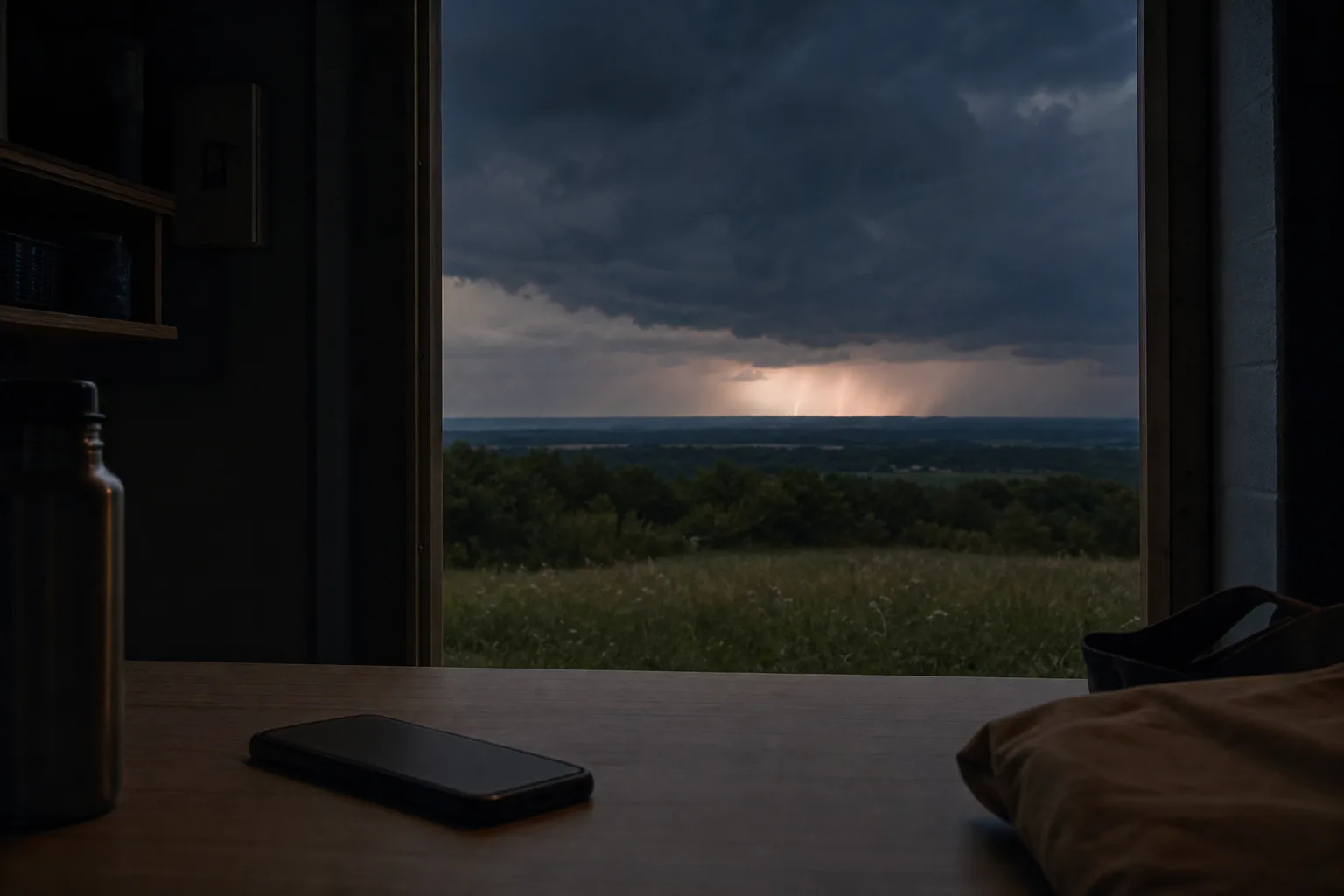
A Severe Thunderstorm Watch does not by itself mean lightning is happening at your exact location right now. It means severe thunderstorms are possible in and near the watch area, so people should stay informed and be ready to act if warnings or dangerous conditions develop. Lightning still matters because thunderstorms can produce dangerous lightning, and NWS lightning safety guidance treats thunder as a sign you are likely within striking distance. The watch product is not live lightning detection, radar, or an all-clear. Use the free ZIP checker for current Severe Thunderstorm Watch status, and use weather.gov and local alerts for warnings, thunderstorm safety instructions, and urgent decisions.
Direct answer: Watch versus lightning happening now
The direct answer is no: a watch does not prove lightning is occurring at your address. A watch is a preparedness product for possible severe thunderstorms over a broader area. Lightning is a real thunderstorm hazard, but the watch does not identify each lightning strike, show whether thunder is audible at your location, or confirm that your outdoor area is safe.
This distinction prevents two common mistakes. The first is over-reading the watch: “There is a watch, so lightning is here now.” The second is under-reading the hazard: “The watch is about wind or hail, so lightning does not matter.” Both are wrong. The watch tells you to prepare for severe thunderstorms; actual thunder or lightning tells you the situation has moved beyond a quiet planning moment.
For the general alert distinction, read what a Severe Thunderstorm Watch means and the Watch vs. Warning guide. This page stays focused on lightning meaning and product scope.
Why severe thunderstorms can still bring lightning
NWS thunderstorm safety material says thunderstorms can produce dangerous lightning along with hail, wind, tornadoes, and heavy rain. That means lightning belongs in thunderstorm safety planning even when the watch criteria people talk about most are wind and hail.
The Storm Prediction Center FAQ adds an important definition boundary. It says a severe thunderstorm is defined by hail at least one inch in diameter, wind gusts of 58 mph or greater, and/or a tornado. It also says that although lightning can be deadly, NWS does not use lightning to define a severe thunderstorm; otherwise every thunderstorm would be severe by definition.
So the clean interpretation is: lightning is not the defining severe-thunderstorm criterion in that explanation, but it is still a dangerous thunderstorm hazard. Do not wait for a wind or hail threshold before taking lightning seriously if thunder or lightning is present.
What changes when thunder or lightning is observed
NWS lightning safety language says there is no safe place outside when thunderstorms are in the area. It also says that if you hear thunder, you are likely within striking distance of the storm. That is action-oriented safety language, not a watch-stage abstraction.
If thunder is heard, lightning is seen, or a local alert gives instructions, stop treating the situation as only a watch explainer. Move indoors or follow the plan for your setting. A family, campsite, outdoor work crew, festival, school, or marina may have different procedures, but the source of urgent direction should be weather.gov, local alerts, and the responsible authority for that place.
Do not invent a personal countdown, distance rule, or detector rule from this page. If a cited source or your local safety plan has a timing rule, use it as written. Otherwise, keep the evergreen answer simple: thunder or lightning means the hazard is active enough that official lightning guidance and local instructions matter now.
What the Watch-only product can and cannot monitor
Thunderstorm Watch monitors Severe Thunderstorm Watch status. It does not monitor live lightning strikes, Severe Thunderstorm Warnings, tornado warnings, radar, forecasts, storm reports, school closures, event cancellations, or local emergency instructions. That boundary is important during lightning questions because a reader may want one page to answer everything happening in the sky.
The ZIP checker can help with one narrow current-status question: whether a Severe Thunderstorm Watch applies to a five-digit US ZIP. It cannot tell you that lightning is absent. It cannot tell you that it is safe to remain outside. It cannot turn uncertainty into an all-clear.
If your situation is recreational and shelter is hard to reach, use the relevant setting guide. For example, camping during a Severe Thunderstorm Watch raises different decisions than a home or office. If your situation involves workers or an event, the plan should name monitoring, authority, and shelter long before thunder is heard.
This boundary also helps with alert fatigue. A person may receive a watch and wonder why there is no thunder yet. That does not make the watch false; it means the alert is about possible severe thunderstorms over a broader area and time window. The opposite can also happen: thunder may be heard before a person notices a watch or warning on a device. In that moment, the observed thunderstorm hazard matters. Do not wait for this site to answer live lightning questions it does not monitor.
Practical next checks without a current-status landing page
Use a sequence rather than a guess. First, check whether a Severe Thunderstorm Watch applies to the ZIP if that is your question. Second, check weather.gov and local alerts for warnings or urgent instructions. Third, observe your immediate conditions: thunder, lightning, darkening sky, increasing wind, or other signs that your local plan treats as action triggers. Fourth, follow the responsible authority for your setting.
This sequence does not promise safety. It simply keeps each source in its lane. A static article explains meaning. The checker handles watch status. Weather.gov and local alerts handle warnings and urgent instructions. Your household, workplace, venue, school, campsite, or marina plan handles local action.
If you are responsible for other people, decide the handoff before storms develop. Parents, supervisors, event organizers, trip leaders, and teachers should not ask a group to interpret watch and lightning scope in real time. One person or role should monitor, one plan should control the next action, and everyone else should know whose instruction to follow if thunder or a warning changes the situation.
When the weather is calm, use the wind, hail, and lightning hub and the main guide library to learn the hazard language. When warnings or thunder are present, stop reading explainers and follow official safety guidance.
FAQ
Questions answered in this guide
Does a watch detect lightning at my address?
Is lightning part of severe thunderstorm risk?
What should I do if I hear thunder?
Official sources
Source ledger
These sources support the guide copy and structured data.
- NWS Understand Severe Weather Alerts
NWS says a Severe Thunderstorm Watch means be prepared because severe thunderstorms are possible in and near the watch area, and a Warning means take action.
- NWS Severe Thunderstorm Safety
NWS says severe thunderstorms can produce dangerous lightning along with hail, wind, tornadoes, and heavy rain.
- NWS Lightning Safety
NWS lightning safety language says there is no safe place outside when thunderstorms are in the area and that hearing thunder means you are likely within striking distance.
- Storm Prediction Center Frequently Asked Questions
SPC states that although lightning can be deadly, NWS does not use lightning to define a severe thunderstorm; otherwise every thunderstorm would be severe by definition.