Watch basics
Severe Thunderstorm Watch Overnight: What To Do Before Bed
What to do before bed during an overnight Severe Thunderstorm Watch: set alert backups, clear a shelter route, charge devices, and avoid false all-clears.
A before-bed watch routine for overnight alerts, a dark shelter path, dependents, wake-up checks, and morning assumptions that can create false confidence.
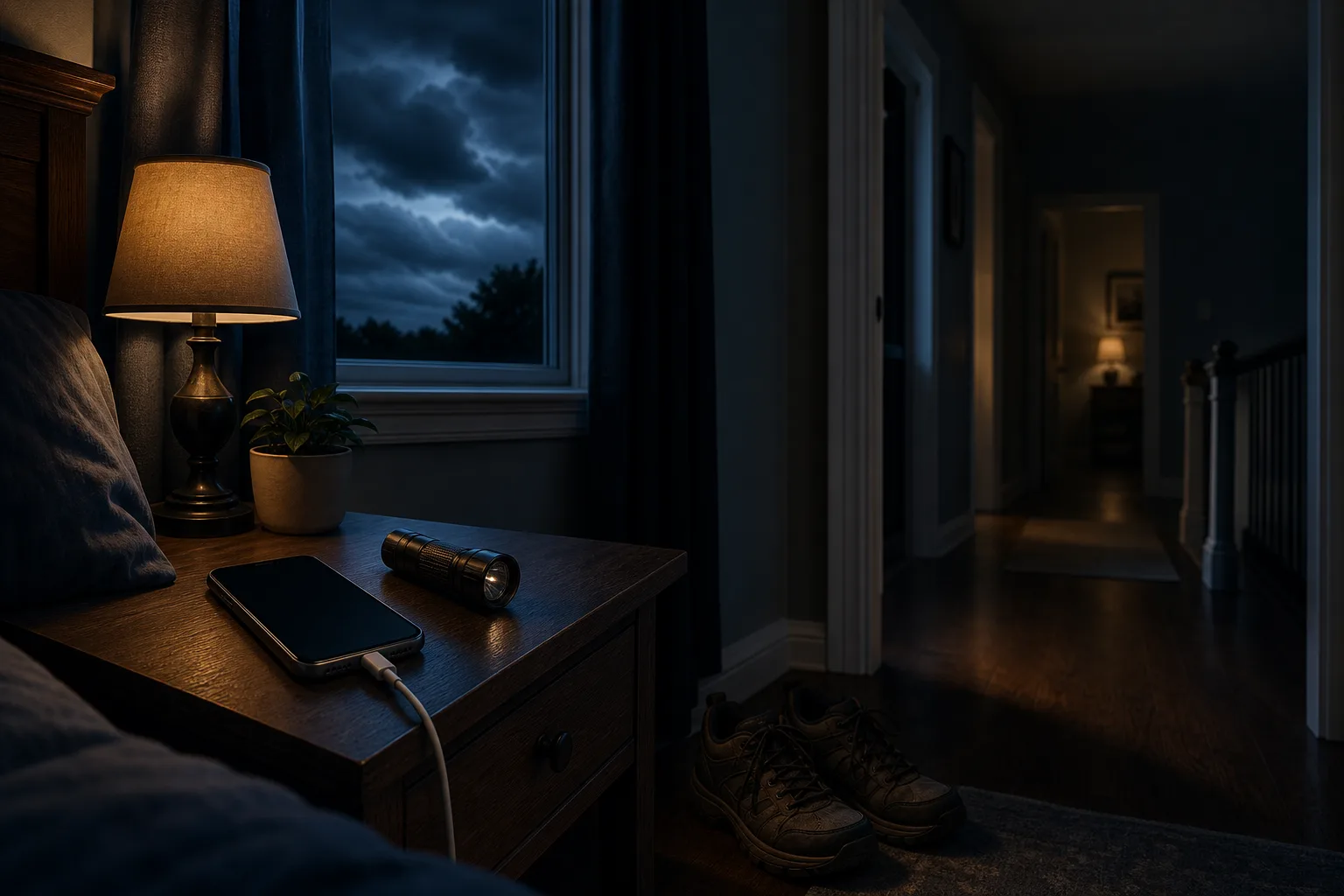
Before bed during an overnight Severe Thunderstorm Watch, set yourself up to hear changes and move safely in the dark. Check whether the watch affects the ZIP or place you care about, keep two alert paths available, charge the phone, place shoes and a flashlight where you can reach them, and clear the route to your chosen shelter area. A watch is still a prepare signal rather than a guarantee that severe weather will hit your home. Include children, pets, and mobility needs in the plan before everyone is asleep. Use the free ZIP checker for current Severe Thunderstorm Watch status, then follow weather.gov and local alerts for warnings.
Direct answer: set up before you sleep
The overnight job is different from an afternoon alert because you will not be watching the sky every few minutes. Ready.gov notes that thunderstorms can happen at any hour in most places. That does not mean you must stay awake for every message. It means you should reduce the chance that an escalation finds you without a working signal, light, shoes, or a route.
Start with a quick status check. If you have not already done so, review what to do when a Severe Thunderstorm Watch is issued and make the readiness decisions before you are tired. Then adapt the routine for sleep: volume, power, hallway clutter, dependents, and a morning re-check.
This page stays in the Watch basics hub because it is about interpreting and using the overnight readiness window. It gives no forecast for tonight and gives no live warning feed.
Two alert paths for overnight hours
Use two overnight paths if you can, because any one method can be muted, delayed, lose power, or fail to wake the right person. A phone may be part of the plan, but avoid assuming a Severe Thunderstorm Watch itself will always produce an urgent phone buzz. Check sound settings, charging, and whether the phone is close enough to wake you without being buried under pillows or set to a mode you cannot hear.
A second path might be NOAA Weather Radio, broadcast media, a weather radio feature, a community emergency channel, or another adult who has agreed to monitor. The NWS says NOAA Weather Radio broadcasts warnings, watches, forecasts, and other hazard information 24 hours a day, seven days a week. If that is your backup, put it where you can hear it, make sure the power source is ready, and use the separate NOAA Weather Radio setup guide for setup details rather than trying to program a receiver while tired.
For recurring ZIPs that matter overnight, Thunderstorm Watch Pro can be a convenience layer for email Severe Thunderstorm Watch monitoring. Keep the boundary clear: email monitoring is no warning service, no SMS, no push, no radar, no forecast, and no guaranteed emergency delivery.
Make the shelter route usable in the dark
A dark house changes simple decisions. A chair in the hallway, shoes in another room, a closed pet gate, or a flashlight with dead batteries can waste the short window after a warning. Before bed, walk the route you would use if a warning or threatening weather wakes you. Move obvious trip hazards if it is safe to do so. Put shoes where you can step into them quickly. Place a flashlight within reach, not somewhere that requires searching.
Avoid overstating what a static article can know about your home. The goal is route familiarity rather than room certification. The goal is to avoid improvising under pressure. If your household has already chosen an interior, lower, windowless or more protected area, make the route to that place usable. If you have not chosen one, use the watch as a prompt to pick the best available option before warnings arrive.
Keep the route boring and repeatable. If you wake to a warning, you do not want a debate about where the flashlight went or whether the hallway is clear. You want the next movement to be familiar.
Plan for children, pets, and mobility needs before bedtime
Overnight readiness should include people and animals who cannot respond as quickly on their own. Decide who wakes children, who handles pets if there is time, and who helps anyone with mobility, hearing, vision, medication, or equipment needs. Keep the roles practical. One person can check alerts; another can gather a child; another can open the path to the shelter area.
Avoid promises you cannot keep. Avoid telling a child the overnight setup means a storm will definitely miss the house. Avoid telling a household member every message will arrive before action is needed. Calm language is better: “We are getting ready. If a warning happens or storms get close, we know where to go.”
If needs are more complex, build that plan outside the alert moment. Overnight preparation time is for final setup rather than solving every communication or accessibility issue from scratch.
What to re-check if you wake up
If you wake during the night, re-check status before making assumptions. Look for whether the alert status has changed, whether a warning has been issued for your area, whether local conditions are deteriorating, and whether your alert paths are still working. If the checker, phone, or web source is unavailable, avoid treating that gap as proof that nothing is happening.
A good middle-of-the-night check is short. Confirm the alert status for the place you care about, listen for warning or community instruction, and decide whether to remain prepared or move to action. If you hear thunder nearby, see dangerous wind, receive a warning, or get local instructions, stop treating the situation as only a watch-stage planning problem.
The broader guide library can help before storm season. At 2 a.m., your trusted signal sources and local instructions matter more than reading multiple articles.
A calm bedside setup that does not depend on one device
The bedside setup should be physical rather than only digital. Put the flashlight where your hand naturally reaches. Keep glasses, shoes, a robe, cane, leash, carrier, or other ordinary movement items in the same place each time. Leave the hallway route simple enough that a sleepy person can follow it. If a door sticks, a pet gate blocks the path, or a laundry basket narrows the hall, fix that before bed if conditions are still safe.
Treat the phone as one tool. Check the charger, volume, and focus settings, but do not build the entire night around a single screen. A small radio, another adult’s alert source, or a local broadcast source can reduce dependence on one battery or one app. The point is quiet redundancy, not noise all night. It is to make sure the household has a better chance of noticing a change that matters.
Keep the setup calm for children and guests. A simple line works better than a frightening lecture: “If we need to move, we go down this hall to that room.” The more concrete the route feels before sleep, the less interpretation people have to do after waking.
Night-specific details easy to forget
Night changes small objects into real friction. Glasses may be across the bedroom. Slippers may be quieter than outdoor shoes but worse on wet steps, so pick what works for the route. A pet leash, carrier, hearing aid case, backup glasses, or mobility aid should have an obvious spot. If a child sleeps behind a closed door, decide who opens it and how calmly they will explain the move.
Think about light spill too. A hallway lamp or low flashlight can help people move without creating glare. Keep keys, wallets, and medications where they normally belong unless the household plan says otherwise; hiding important items in a new place at midnight can create its own problem. If someone sleeps with earplugs, headphones, or a fan, account for that before bedtime.
These details are mundane, which is why they work. The best overnight setup feels like placing tomorrow’s clothes beside the bed: simple, repeatable, and easy to undo if nothing happens.
Morning all-clear assumptions to avoid
Morning can create false confidence. A quiet night cannot prove the overnight setup never mattered. A missed phone buzz cannot prove messages worked correctly. A stale webpage cannot prove the alert has ended. An expiration time you remember from earlier may have changed, or another product may now matter more.
Before returning to normal routines, check a current source again. For active Severe Thunderstorm Watch status, use the ZIP checker. For warnings, urgent instructions, radar interpretation, forecasts, or emergency direction, use weather.gov, NOAA Weather Radio, public authorities, and community alert channels.
Overnight readiness is about friction, not fear. It is about lowering friction while you sleep: charged device, second alert path, clear route, shoes, light, dependents, and a morning re-check. Once those are handled, you have done the preparation work this page can support. The rest belongs to current official alerts, conditions outside, and warning-stage instructions if they arrive.
Official sources
Source ledger
These sources support the guide copy and structured data.
- Thunderstorms & Lightning | Ready.gov
Checked 2026-07-26: Ready.gov states thunderstorms can occur year-round and at any hour in most places, recommends warning systems, emergency planning, sturdy buildings, and attention to alerts and warnings.
- NOAA Weather Radio
Checked 2026-07-26: NWS describes NOAA Weather Radio as broadcasting official Weather Service warnings, watches, forecasts, and other hazard information 24 hours a day, seven days a week.
- Understand Severe Weather Alerts
Checked 2026-07-26: NWS says a Severe Thunderstorm Watch means be prepared, stay informed, and be ready to act if a warning is issued.
- Thunderstorm Watch Pro
Checked 2026-07-26: the product page states Pro is email-only Severe Thunderstorm Watch monitoring for up to five saved US ZIPs and does not provide SMS, push, calls, forecasts, radar, Warnings, or guaranteed emergency delivery.