Travel and outdoors
Should You Drive During a Severe Thunderstorm Watch?
Use a Severe Thunderstorm Watch to make driving conditional: check live status, know shelter options, and let warnings or storms control action.
A watch is not a universal driving ban, but it should turn flexible trips into conditional decisions tied to official alerts and shelter options.
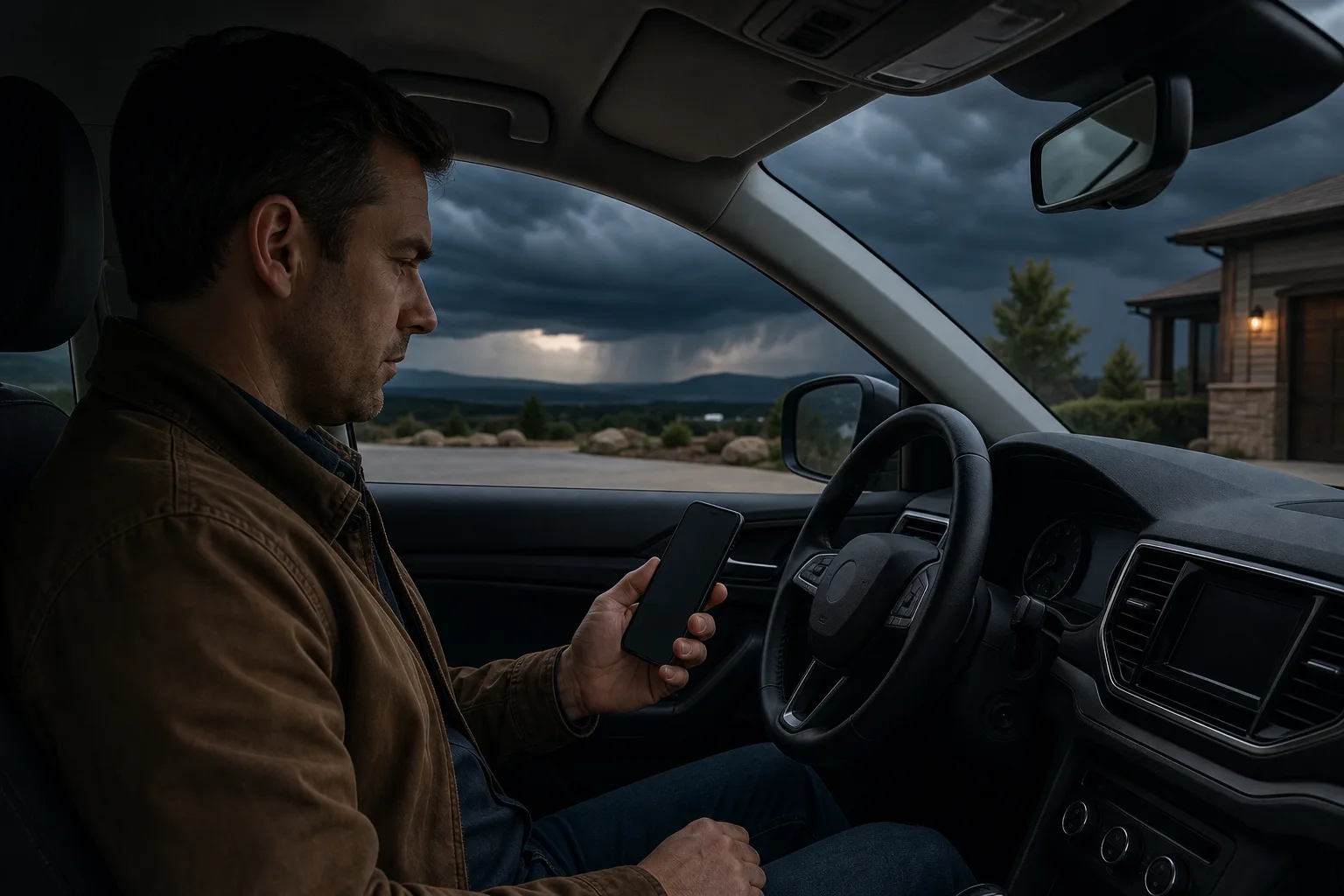
You can drive during a Severe Thunderstorm Watch only if the trip still makes sense after you check current information, timing, shelter options, and official alerts. A watch is not a universal driving ban and does not prove that your exact route is dangerous right now. It also is not an all-clear. Treat the drive as conditional: postpone flexible trips when waiting indoors is easy, avoid starting if warnings or storms are near, and know where you would stop before wind, hail, lightning, heavy rain, or low visibility becomes the problem. Use the free ZIP checker for current Severe Thunderstorm Watch status, and use weather.gov, local alerts, and road authorities for urgent or route-specific decisions.
Direct answer for drivers
The direct answer is a decision framework, not a yes-or-no rule for every driver. A Severe Thunderstorm Watch means severe thunderstorms are possible in and near the watch area. That gives you time to prepare and decide, not permission to ignore later warnings and not proof that every mile of road is affected.
Ask three questions before starting. Is the trip flexible? Are you likely to be outside the vehicle, parked in an exposed place, or crossing an area during the watch window? Do you have a reasonable place to wait in a sturdy building if a warning or storm approaches? If the trip is optional and waiting has low cost, waiting is often the lower-regret choice. If the trip is necessary, make it conditional and keep checking official updates.
This driving page is part of the travel and outdoors guide hub. It is intentionally not a road map, navigation tool, radar page, or current route forecast.
What a watch changes before you leave
Before a watch, many ordinary trips are routine. After a watch is issued, the same trip deserves a quick review. Check whether the origin or destination ZIP is under a watch with the ZIP checker. Then check weather.gov and local alerts for warnings. If your drive crosses several areas, remember that a single evergreen article cannot track each county, road segment, or storm cell for you.
Look at timing in practical terms. A ten-minute errand with a sturdy store at each end is different from a rural drive with few indoor stops, a long bridge or open stretch, or a return trip that falls later in the watch. FHWA road-weather material supports the broader point that adverse weather, including rain, hail, low visibility, and severe crosswinds, affects road safety and travel time. That does not predict your route; it explains why a watch should make you less casual about timing.
Set a simple trigger before you leave: “If a warning is issued, I wait indoors,” “If thunder is nearby, I do not start the walk across the lot,” or “If heavy rain reduces visibility, I stop at the next reasonable sturdy place instead of pressing on.” The trigger prevents an avoidable mistake: deciding in motion while conditions are getting worse.
When to pause or turn the trip conditional
Pause the trip when the purpose is flexible, when the destination can wait, or when you would have limited shelter choices along the way. A watch is a good time to move an appointment, delay a pickup, leave earlier only if that reduces exposure, or choose an indoor wait instead of trying to beat the weather. Do not let the word “watch” become a dare to finish the drive before warnings appear.
A conditional trip is one where you still go, but with boundaries. You know the alert source you will check. You know a sturdy place where you can wait. You have told someone if your timing matters. You are not relying on a phone buzz alone. You are also not treating the car as a complete solution for every severe-thunderstorm hazard. Ready.gov says to pay attention to alerts and warnings, move indoors or into a roofed vehicle when thunder roars, and avoid flooded roadways. Those are broad safety principles, not a route guarantee.
If your question is really about the alert type, read Severe Thunderstorm Watch versus Warning before leaving. If the alert has changed from watch to warning, the action level has changed too.
What changes if a warning or storm approaches
A warning or approaching severe storm changes the job from planning a trip to taking protective action. The NWS watch-and-warning source says a warning means take action and that warnings indicate imminent danger to life and property. For a driver, that means official warning information, visible conditions, and local instructions outrank the original plan.
If a sturdy building is nearby and reachable before conditions worsen, official high-wind guidance supports moving to a sturdy building. If you are already driving and cannot reach one, use current weather.gov guidance and local instructions rather than this article as the operational manual. Do not improvise a risky shelter choice because it is convenient, and do not keep driving into flooded roadways. Ready.gov explicitly warns not to drive through flooded roads.
Avoid a common mental trap: “I am already in the car, so I might as well finish.” A roofed vehicle can reduce some lightning exposure compared with being outside, but it does not make wind, hail, floodwater, falling trees, debris, visibility, or traffic risk disappear. When conditions change, the safer decision may be to wait.
Road-weather hazards a static guide cannot predict
This guide cannot know whether rain is falling on your exact road, whether hail is crossing the next town, whether a warning includes your route, whether a low spot is flooded, or whether a crosswind-prone segment has restrictions. FHWA road-weather information is useful because it explains the categories that can affect roads: precipitation, low visibility, severe crosswinds, surface conditions, capacity, and travel time. It is not a live route report.
That boundary matters for severe-thunderstorm wind questions too. The severe thunderstorm watch wind speed guide explains the wind criterion behind severe-thunderstorm alerts, but a threshold does not tell you what gust will hit your car. It only explains why damaging wind potential belongs in the decision.
Use local road authorities, weather.gov, and current alerts for live conditions. If you cannot verify conditions, do not turn the uncertainty into an all-clear. Waiting indoors is often a valid decision when the cost of being wrong is high and the cost of waiting is low.
Where to check live watch status
Current Severe Thunderstorm Watch status belongs in the checker, not in this article. Use the ZIP checker for a five-digit US ZIP, then use official alert sources for warnings and local instructions. The guide library can help you understand terms and prepare, but it cannot tell whether your route is clear, whether the next road is flooded, or whether a warning has just changed.
Before driving, answer one sentence: “If the alert escalates or conditions worsen, I will wait at ___.” If you cannot fill in the blank with a practical sturdy place, that is a sign to delay, shorten, or change the trip while you still have time.
FAQ
Questions answered in this guide
Does a watch mean I must cancel every drive?
Can this guide tell me if my route is safe now?
What should I decide before leaving?
Official sources
Source ledger
These sources support the guide copy and structured data.
- Understand Severe Weather Alerts
Defines a Severe Thunderstorm Watch as be prepared, with severe storms possible in and near the watch area, and a Warning as take action.
- During a High Wind Event
Supports moving to a sturdy building for high wind or severe thunderstorm warnings and gives driving guidance for people caught outside or driving.
- How Do Weather Events Affect Roads? - FHWA Road Weather Management
Documents how adverse weather such as rain, hail, low visibility, and severe crosswinds affects road safety, capacity, traffic flow, and travel time.
- Thunderstorms & Lightning | Ready.gov
Supports paying attention to alerts and warnings, moving indoors or into a roofed vehicle when thunder roars, and not driving through flooded roadways.