Home preparedness
What To Put in a Severe Thunderstorm Emergency Kit
What to put in a Severe Thunderstorm emergency kit during a Watch: alerts, light, batteries, charging, shoes, documents, medications, and modest water or snacks.
A practical watch-stage storm kit guide focused on alerting, light, power, shoes, documents, medication information, and ordinary food or water without shopping hype.
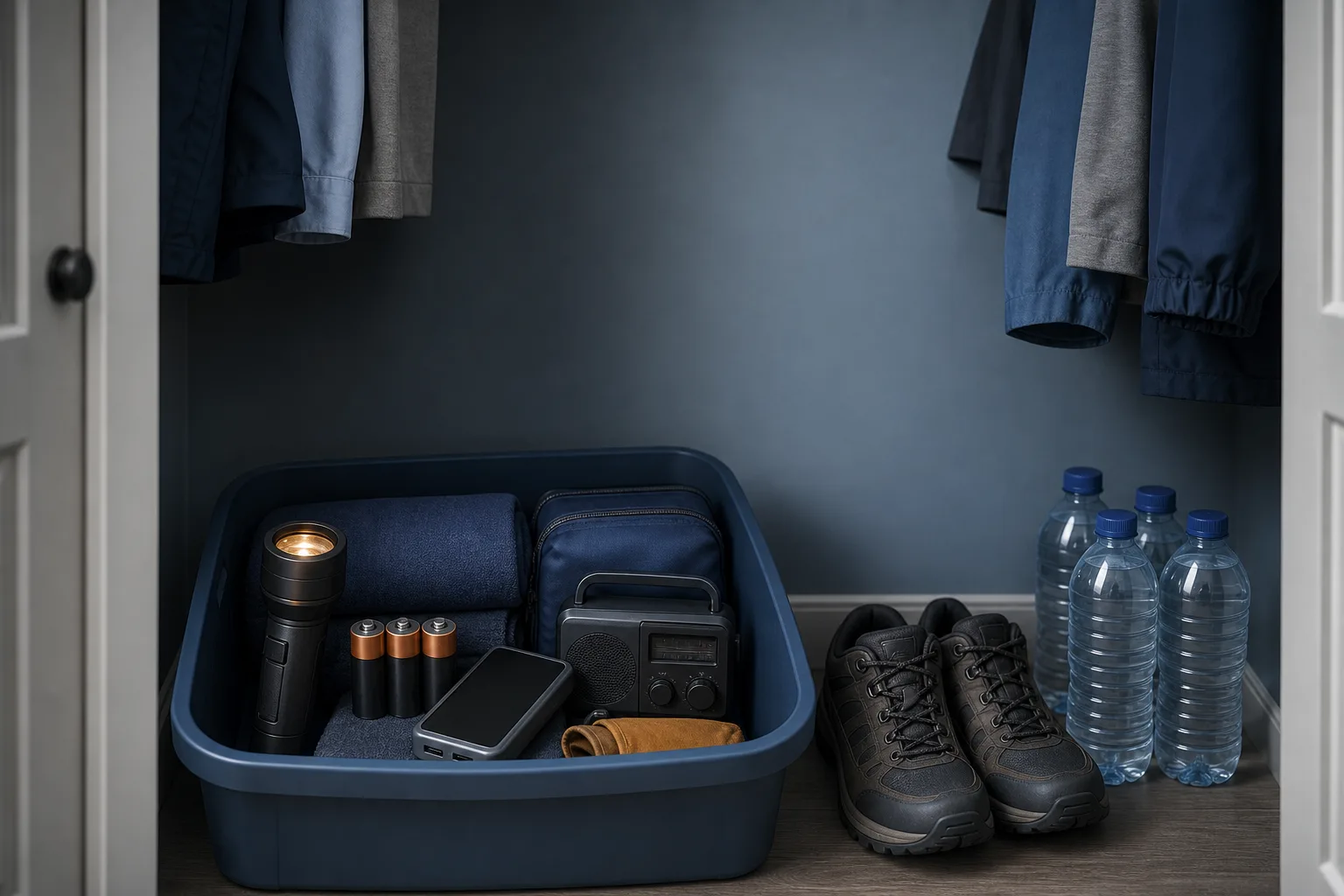
A severe thunderstorm emergency kit for the watch stage should be practical and reachable: alert source, flashlight, batteries, phone charger or power bank, sturdy shoes, basic documents, needed medication information, and modest water or snacks if the household may be disrupted. Ready.gov has broader disaster-kit lists, but a Severe Thunderstorm Watch does not create a special official kit requirement or require panic shopping. The goal is a darker, noisier, shorter household disruption made easier at home, not a survival catalog. Use the free ZIP checker for current Severe Thunderstorm Watch status, then follow weather.gov and local alerts if warnings or urgent instructions arrive.
Direct answer: the short storm kit
The most useful storm kit is the one people can find. During a watch, do not start by building an elaborate pantry. Start with the items that reduce confusion if power flickers, the house gets dark, or a warning requires moving to an interior room: light, alerting, power, shoes, and essential information.
Ready.gov’s Build A Kit page lists many general emergency supplies, including water, food, radios, flashlight, first aid kit, batteries, chargers, documents, prescription medications, and sturdy shoes. Those lists are useful, but this page narrows the job to severe-thunderstorm watch readiness. The watch stage is short enough that reachable basics matter more than perfect inventory.
If you need the broader household roles and room choices, use the home preparedness plan guide and the Home preparedness hub. This page stays focused on kit contents.
Alert and lighting items
Put alert and lighting items near the top of the kit or in a known place beside it. A battery-powered or hand-crank radio, NOAA Weather Radio if you use one, flashlight, extra batteries, and a simple backup light can matter more than specialty gear. If your household depends on a phone for alerts, keep the charger or power bank with the kit or in an equally obvious place.
Red Cross thunderstorm guidance supports backup charging, a battery-powered radio, and monitoring local weather and news. Ready.gov’s alert guidance in the thunderstorm page supports paying attention to alerts and warnings. The point is not that every household must own the same device. The point is that a warning heard too late is a poor plan.
For people without reliable smartphone access, the guide on weather alerts without a smartphone covers non-phone alert options. Do not treat the kit as the only alert path.
Phone charging and batteries
Power items should be boring: the right cable, a wall charger, a charged power bank if available, and batteries that match the radio or flashlight. Check them before storm season and again when a watch creates a reason to look. If a power bank is always empty, it is not a backup. If the flashlight uses a battery size nobody keeps, it is not a reliable light.
Avoid brand recommendations and affiliate-style thinking. You do not need a “best storm gadget” to follow a watch. You need devices you already understand and can use in the dark. Labeling can help at home, but do not depend on readable labels in a moment when the lights are out; organize the kit so the most important items are obvious by shape and placement.
If power stays on and no warning arrives, nothing is wasted. The same charged phone and known flashlight are useful the next time weather changes.
Documents, medications, and sturdy shoes
Keep document and medication information practical. Ready.gov lists important family documents and prescription medications among supplies to consider. For a thunderstorm kit, that may mean copies of key contacts, a list of medications or equipment needs, insurance or identification copies in a waterproof pouch, and any information a household member may need if power or communication is disrupted.
Do not use a general article as medical advice. This guide cannot tell you how to store a specific medication, replace a prescription, or handle medical equipment during an outage. It can remind you to plan ahead with appropriate professionals or caregivers if medical continuity depends on power, refrigeration, mobility, or communication.
Sturdy shoes are easy to overlook. If a warning arrives at night, you may not want bare feet around broken branches, wet floors, garage clutter, or glass. Keep shoes near the shelter route or kit, especially for overnight watches.
Water and snacks without overbuilding
Ready.gov’s full kit list includes water and food for several days. That is valid general preparedness, but it can overwhelm someone who searched for a severe thunderstorm kit during a watch. For the short watch-stage version, think in two layers.
Layer one is immediate: water bottles, a few snacks, and any household-specific needs that make a short disruption easier. Layer two is broader emergency preparedness: the longer water and food supply your household chooses to maintain outside the storm moment. Do not pretend a watch creates a new official purchase deadline, and do not use this page to sell an oversized kit.
Thunderstorms can bring wind, hail, lightning, flash flooding, and outages. A modest kit helps if the lights go out or you spend time in an interior room. Broader disaster supplies are useful too, but they should be planned calmly, not assembled from fear while storms are nearby.
Where to store and update the kit
Store the kit where it matches the plan. If the shelter area is a basement, the kit might live nearby unless moisture or access makes that impractical. If the chosen room is an interior closet, a small bin on the route may work better. The exact location is less important than everyone knowing it.
Use the guide library for related planning questions, but keep one source of household truth. Put the kit location in your home plan. Check batteries, power banks, and documents before storm season, after using items, and when a watch reminds you that the kit has not been opened in months.
A useful kit is not a symbol of anxiety. It is a small collection of things that make warning-stage action and short disruptions less chaotic: hear alerts, see in the dark, keep a phone alive, put on shoes, find information, and handle ordinary needs. That is enough for the severe-thunderstorm watch job this page is meant to answer.
Official sources
Source ledger
These sources support the guide copy and structured data.
- Build A Kit | Ready.gov
Checked 2026-07-26: Ready.gov lists basic emergency supplies including water, food, battery-powered or hand-crank radio, NOAA Weather Radio, flashlight, first aid kit, batteries, chargers, important documents, prescription medications, and sturdy shoes.
- Thunderstorms & Lightning | Ready.gov
Checked 2026-07-26: Ready.gov supports thunderstorm-specific context, including wind, hail, lightning, flash flooding, warning systems, emergency plans, sturdy buildings, and attention to alerts and warnings.
- Thunderstorm Safety | American Red Cross
Checked 2026-07-26: Red Cross supports thunderstorm readiness with local alerts, monitoring local weather and news, backup charging, a battery-powered radio, watch versus warning response, and utility outage planning.