Families, schools, and pets
Emergency Preparedness Plan for Older Adults Living Alone
Build an emergency preparedness plan for older adults living alone during thunderstorm watches: contacts, alerts, supplies, access, and power questions.
An independence-focused thunderstorm-watch routine for older adults living alone: support network, access preferences, redundant alerts, supplies, documents, and power planning questions.
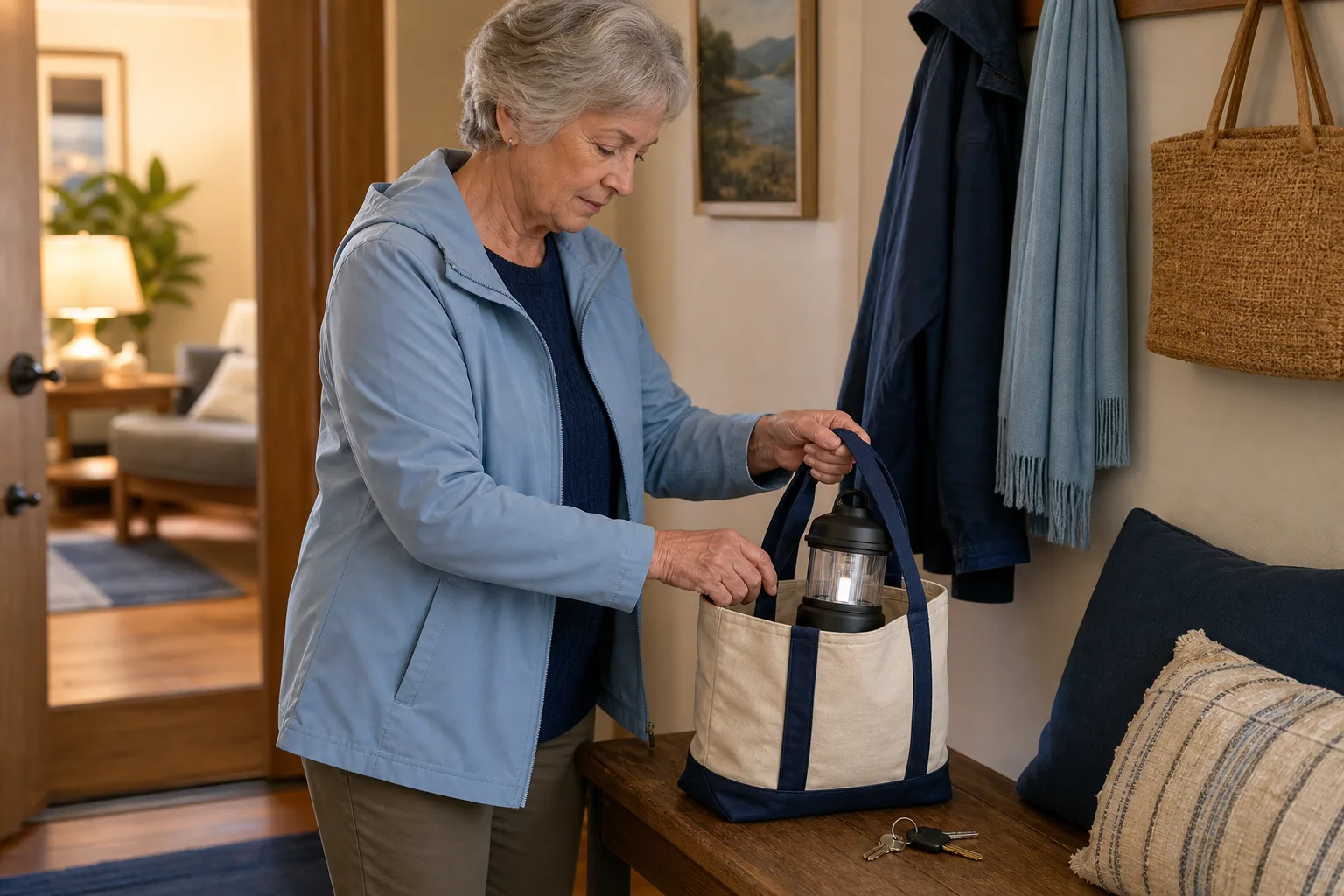
An emergency preparedness plan for older adults living alone should be owned by the older adult whenever possible: who checks alerts, who can be contacted, how someone may enter with consent, what supplies and documents are easy to reach, and what power-outage questions are already answered. A Severe Thunderstorm Watch is the get-ready stage, not a guarantee that severe weather will strike one address. Use the free ZIP checker for current Severe Thunderstorm Watch status, then follow weather.gov and local alerts for warnings or urgent instructions. This guide supports planning; it does not give medical, legal, financial, transportation, or capacity advice.
Direct answer: the living-alone watch routine
A useful living-alone routine fits on one page. It should answer six questions before storm season and be easy to use when a watch is issued.
- How will I know a Severe Thunderstorm Watch is active for my area?
- Who, if anyone, do I want to hear from during a watch?
- Who has permission to enter, and under what conditions?
- Where are my flashlight, shoes, phone charger, documents, and supplies?
- What depends on electricity, refrigeration, transportation, or outside help?
- What changes if a Severe Thunderstorm Warning, thunder, lightning, or local instruction arrives?
The routine should not assume that every older adult is frail, dependent, or waiting for a caregiver. Many people living alone want a plan that preserves privacy and independence. That is compatible with having backup contacts. Ready.gov’s older-adult guidance emphasizes assessing needs, creating a plan, and engaging a support network. The key is that the plan reflects the person’s preferences instead of replacing them.
For broader household context, compare this page with the home preparedness plan. This guide narrows that work to the specific living-alone decisions that matter when a watch creates time pressure.
Support network and key or access plan
A support network can be two neighbors, a relative, a friend, a building manager, a faith-community contact, or another trusted person. It does not have to be large. It does have to be specific. Ready.gov advises older adults to create a support network, make an emergency plan, practice it with that network, and make sure at least one person knows where emergency supplies are and has an extra key if that is part of the plan.
Consent matters. A written note can say who may call, who may knock, who may enter, and who should not. Some people prefer a neighbor check-in but not a key. Some prefer a lockbox code shared with one person. Some prefer that no one enters unless emergency services are involved. The watch routine should record the choice; it should not pressure the person to surrender control.
Use plain check-in language. “A watch is active; do you want a call now or only if a warning is issued?” is more respectful than “I’m coming over.” If the older adult is the reader, write the message you want others to use. If you are a family member reading this for someone else, ask first and keep the plan in the person’s words.
Alert sources that do not depend on one phone
One phone is not a plan. It can be silenced, charging in another room, out of service, or confusing during a noisy evening. Build at least two alert paths that the older adult actually uses. Options may include phone alerts, local TV or radio, NOAA Weather Radio, weather.gov, a trusted person, a building notification system, or another local alert method. Ready.gov’s planning page asks how a household will receive emergency alerts and warnings; the answer should not rely on a single device if another practical option exists.
Place alert tools where they can be heard or checked without rushing. If a radio is part of the plan, keep batteries or power nearby. If a phone is part of the plan, make charging a watch-stage action. If a trusted contact is part of the plan, agree on the trigger: watch check-in, warning check-in, power-outage check-in, or no routine check-in unless requested.
For people who do not use smartphones or prefer alternatives, see weather alerts without a smartphone. The point is not to collect every device. It is to choose reliable paths that match hearing, vision, mobility, language, and daily habits.
Supplies, documents, and medication information
The watch routine should name the items that become harder to find in the dark: flashlight, shoes, glasses, hearing-aid batteries, mobility device, phone charger, water, pet or service-animal supplies, and a small set of documents or contacts. Ready.gov says supplies should meet individual needs, including medicines, medical supplies, batteries, and chargers.
For medications, avoid making medical decisions inside a weather plan. Instead, record information and questions. List names, schedules, pharmacy contact, prescriber contact, refrigeration needs, and what the doctor or pharmacist has advised about interruptions. If a medication or device is power-dependent, put the provider question on the plan before storms: “What should I do if power is out longer than expected?”
Documents should be useful, not exhaustive. A paper contact card can include emergency contacts, important medical information the person chooses to share, building contacts, insurance card copies if desired, and preferred communication methods. Store it where the older adult can reach it and where a designated support person knows to look, if that access is consented to.
Power-outage questions to ask before storms
Ready.gov says power outages can disrupt communications, water, transportation, and services, and can prevent use of medical devices. That does not mean every Severe Thunderstorm Watch will cause an outage. It does mean the watch is a good time to ask power-dependent questions while there is still time to prepare.
Write down what needs electricity: phone, medical equipment, mobility equipment, refrigerator, internet router, garage door, building elevator, oxygen concentrator, cooling or heating equipment, or other devices. Then separate general readiness from individualized medical advice. General readiness might include charging a phone, keeping a flashlight available, and knowing whether a home phone works without power. Medical or device-specific planning should come from the appropriate provider, pharmacist, manufacturer, utility program, or local agency.
If a generator is part of someone’s existing plan, follow the manufacturer’s instructions and official carbon-monoxide safety guidance; do not improvise during a thunderstorm watch. If extreme heat or cold is also a concern, local officials and support contacts may matter more than the watch article.
How to practice without losing independence
Practice should be respectful and short. The older adult chooses a day, invites the chosen support person if desired, and walks through the plan: check alert path, confirm contact card, locate supplies, test flashlight, review access preference, and decide what changes during a warning. That is enough.
A practice session is not an inspection. It should not become a debate over living arrangements, finances, driving, medical treatment, or legal authority. If those topics need discussion, they belong in the right professional or family context, not in a thunderstorm-watch checklist.
If the reader is a remote family member, the most useful action may be to ask: “What kind of check-in would you actually want if a watch is issued?” For a product-specific loved-one monitoring angle, see monitoring a parent’s Severe Thunderstorm Watch status, but remember that any monitoring tool supplements, not replaces, official alerts and local instructions.
The finished plan should make the older adult feel more capable, not more managed. Keep it visible, revise it after a confusing alert, and use the families, schools, and pets guide hub and main guide library for related planning only when there is no immediate warning to act on.
FAQ
Questions answered in this guide
Should an older adult living alone share a key?
Can one phone be the whole alert plan?
What belongs on the medication list?
Official sources
Source ledger
These sources support the guide copy and structured data.
- Older Adults | Ready.gov
Ready.gov advises older adults to assess needs, create a plan, engage a support network, plan communications, include individual supplies, and ensure a trusted person knows key and supply details.
- Make A Plan | Ready.gov
Ready.gov supports household emergency planning around alerts, shelter, communication, contacts, medical information, needs, and practicing the plan.
- Power Outages | Ready.gov
Ready.gov says power outages can disrupt communications and prevent use of medical devices, and advises planning for batteries, alternative power, and medical-provider guidance for power-dependent needs.